
Testing the water hardness yourself
There are various methods you can use to test the hardness of your water. For example, you can measure the calcium content in the water using soap tests, test strips and drop tests (water hardness tester). You can also request information from your local water supplier.
See also:
Water hardness by municipality
Water hardness test
Below, we describe the various tests you can use to check the hardness yourself at home. Handy ways to to measure the calcium content of the water.
1 Soap test
This is the simplest test to determine whether your water is hard or not. Whilst it is easy, it isn’t very accurate. Nevertheless, this test can provide some indication. Take a small jar or tube and fill it with 2 cl of water. Add 2 drops of green soap. Shake the jar or tube thoroughly from side to side. Is there a lot of foam? If so, this is an indication that your tap water is soft. Is there no foam? If so, your water is probably fairly hard.
Once again, this is merely a guide. However, if you’d like a more accurate way of measuring the limescale in your tap water, try using a test strip or a drop test. Incidentally, this doesn’t tell you anything about whether you’re actually experiencing problems with limescale. Also soft water It does cause limescale problems, but it takes a bit longer.
2 Test strip
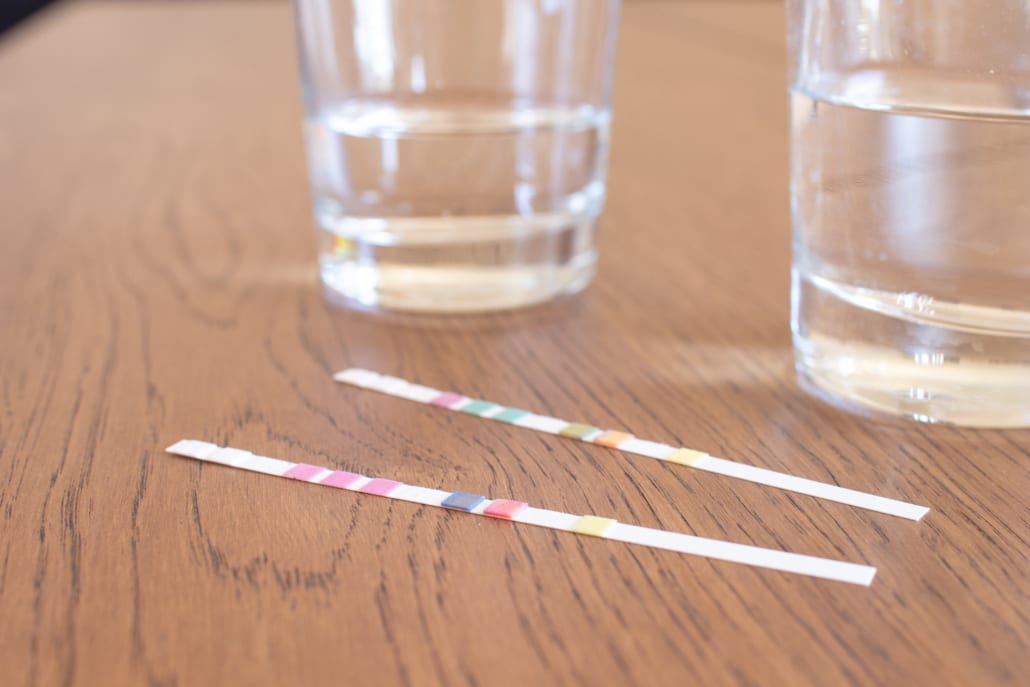
There are test strips available that allow you to measure the hardness of the water. These strips are widely available. You hold the strip in the water for a few seconds. After a minute, check the colour of the strip. Check the packaging to see which hardness level this corresponds to. This is a simple way to measure the calcium content in the water.
This test strip is reasonably accurate, but not as accurate as the Water hardness drop test.
3 Drop test
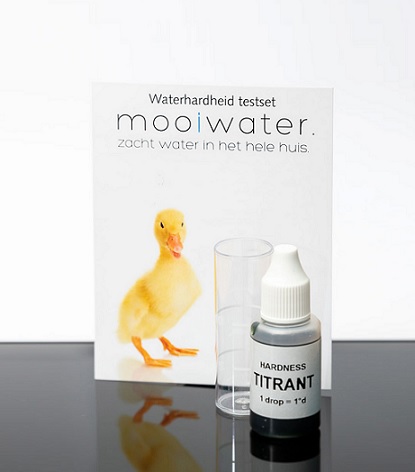
A drop test provides a very accurate indication of the hardness of your tap water. Such a water hardness tester we sell in our online shop. Fill the test tube provided with water and add one drop of test solution. Then shake the test tube. Repeat this until the colour of the test water changes from red to green. The number of drops you have added at that point corresponds to the hardness of your water. This makes it ideal for measuring water hardness.
4 Requesting information from the local water supplier
Below is an alphabetical list of all water companies in the Netherlands. By clicking on the name of your local water company, you can find out exactly how hard your water is. Handy, isn’t it? But be careful: if you’re told your water is soft or fairly soft, that doesn’t necessarily mean you won’t have problems with limescale. If your water has a hardness of 7dH or lower, it simply takes longer before you start to experience any problems. With a water softener, you’ll never have to worry about it again!
Waternet (Amstel, Gooi, Vecht and Amsterdam Water Board)
The best way to measure calcium in water
The best way to measure the calcium content in water is to drop test. This drop test for measuring water hardness provides a fairly accurate indication of the hardness of your tap water.
This water hardness drop test is available to buy in our online shop and with this, you can test the water dozens of times.
When is water classified as hard or soft according to the German hardness scale?
In the Netherlands, we print the water hardness expressed in German degrees (ºdH). This indicates the amount of calcium and magnesium in the water. The more calcium or magnesium there is in the water, the harder the water is. Water hardness can vary significantly from one water supplier to another. This is due, for example, to soil composition, groundwater flow and agricultural practices.
0 – 3 dH: very soft water.
4 – 6 dH: fairly soft water.
6–8 dH: average water.
8 – 10 dH: fairly hard water.
> 10 dH: very hard water.
In the Netherlands, the German hardness varies from approximately 2.5 dH to 14.5 dH. So you could say that nobody in the Netherlands suffers from extremely hard water, as nobody has a hardness level higher than 18dH! In the Netherlands, the water companies therefore ensure that you have reasonably soft water in your home, and you might think that a water softener so in the Netherlands it’s an unnecessary luxury. Why, then, are more and more of them being sold?
Actually, the most important question isn’t how hard your water is in dH, but whether you’re experiencing limescale in your bathroom, on your appliances and on your skin. And as you can see, even at 4 dH, you can already be quite bothered by limescale. See also ‘What is water hardness?‘. If that’s a problem for you, then a water softener The perfect solution. It saves time, reduces the need for descaling and cleaning products, and is good for your skin and hair. Of course, it takes much longer for your shower head to become limescale-clogged and for you to need to descale your coffee machine with 8dH than with 40dH. But that doesn’t mean you’re not affected by it at all, does it?
See also the page: What is water hardness?
Have you made a decision yet?
Why not request a free, no-obligation quote?
Do you have any questions?
We’re here to answer any questions you may have!
Have you made a decision yet?
Why not request a free, no-obligation quote?
Running costs
Compare
Overview of water softeners
Placement
Water hardness
Facts and myths