What is soft water?
What is soft water? Many people think that soft water is a liquid and hard water is hard water. This isn’t necessarily incorrect, but in this case we mean something slightly different. We think it’s better to refer to water as ‘calcium-containing’ and ‘calcium-free’. But what exactly does this mean? In this article, we’ll tell you everything you need to know about soft water. Read on to find out more!
The difference between hard and soft water
Tap water contains all sorts of minerals. The specific minerals present in tap water depend on their quantities and the location. These differences are caused by the source of the water that comes out of the tap. If the water is extracted from the ground in a limestone-rich area, it contains a lot of calcium (lime). Where the soil is not very calcareous, the water naturally contains far less calcium.
The In the Netherlands, water hardness is expressed in dH (= German hardness). This is a measure of the amount of calcium and magnesium present in the water. In the Netherlands, the hardness of the water supplied by water companies ranges from 2.5dH to 14.5dH. This is a huge difference, which is therefore caused by the source from which the water is drawn. The difference between hard and soft water is therefore that hard water contains a lot of calcium and/or magnesium, whilst soft water contains little or none at all.
Making soft water
Due to the adverse effects of hard water, people have long sought a solution to soften it. Around 50 years ago, the first water softeners on the market. These were based on what is known as ion exchange. This means that the excess calcium and magnesium particles (ions) were exchanged for harmless sodium particles. During the ion exchange process, the calcium and magnesium ions are removed from the water, so they no longer cause any problems. After a certain period of time, the accumulated calcium and magnesium must be removed by means of a flush. This process utilises sodium from the required salt (sodium chloride).
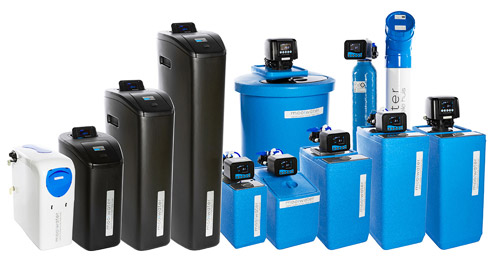
The water softeners from beautiful water are designed to remove all calcium and magnesium from the water. The water is softened to 0dH as standard. As all limescale is removed, you are guaranteed to be free of any adverse effects.
Have you made a decision yet?
Why not request a free, no-obligation quote?
Is soft water unhealthy?
Calcium and magnesium are essential minerals for humans. However, the claim that soft water is therefore unhealthy is incorrect. This is because there are so few of these minerals in your tap water that you would need to drink between 30 and 100 litres a day to reach your recommended daily intake. So there is no such thing as water that is too soft, and it is not unhealthy.
Are there any downsides to soft water?
Soft water therefore has no disadvantages, however, hard water has many such effects. The calcium present, in particular, causes all sorts of undesirable effects. Below, we highlight a number of the effects of hard and soft water.
Soap and hard water
When you’re going to wash something, you naturally use soap. However, the soap can only do its cleaning job once all the limescale in the water has been neutralised. Only then does the remaining soap really get to work. If you don’t add enough soap to hard water, no lather will form. With soft water, this happens straight away. Another drawback of using soap with hard water is the formation of what is known as limescale soap. As the soap binds with the limescale, a greasy substance forms spontaneously which can build up on the sides of your bucket or basin.
Limescale in the bathroom
Unwanted effects can also occur in the bathroom due to hard water. The shower screen, in particular, turns white with limescale. The rougher the surface becomes due to limescale, the easier it is for new limescale to build up again. Furthermore, bacteria tend to attach themselves to the rough surface of the limescale. These bacteria are difficult to remove.
What applies to the shower also applies to the rest of your bathroom. The other tiles and grout will also be affected. As both the grout and the tiles themselves consist largely of limescale, cleaning with acid and harsh chemicals will ultimately damage your entire bathroom. In addition, the limescale particles in the shower head and taps cause blockages. This results in a reduced flow rate and water pressure
The effect of hard water on your energy bill
Heating water causes limescale to form easily. This means that the heating elements in your home will become encrusted with limescale over time. The limescale will form an insulating layer, reducing the efficiency of your heating system and resulting in higher energy bills. And what about your central heating boiler, kitchen water heater, coffee bean grinder, Quooker tap, dishwasher, washing machine and so on?.
In some cases, you can do something about this, for example by using a special detergent (Calgon) or by descaling your coffee machine regularly. Unfortunately, there is absolutely nothing you can do about limescale build-up in your Quooker.
Are water softeners right for you?
Stop limescale build-up, save on cleaning products and energy, and extend the life of your appliances!
Soft water is good for the skin
Once the limescale has been removed from the water, it no longer has an abrasive effect on the skin. Soft water is therefore good for the skin. Unfortunately, this does not mean that everyone with skin problems whether it helps with conditions such as eczema or psoriasis. These skin conditions are caused by a patient’s predisposition, and environmental factors also play a role. Soft water is not a cure, but it can certainly help. Many users have noticed a clear difference in the severity of their skin condition before and after purchasing a water softener.
Want to find out more?
With softened water, you’ll never have to worry about all those unwanted effects again. A water softener offers the solution. Would you like to find out more about our water softeners Or do you have any questions? If so, please contact Join us.
Do you have any questions?
We’re here to answer any questions you may have!
Have you made a decision yet?
Why not request a free, no-obligation quote?
Running costs
Compare
Overview of water softeners
Placement
Water hardness
Facts and myths