
Consequences of limescale build-up
Hard water contains a relatively high proportion of limescale. It is absolutely harmless to humans, but it can damage your water pipes and appliances. Although water companies tend to downplay the effects of limescale, it can cost you a lot of money every year. A water softener prevents the effects of limescale.
These are the 9 effects of hard water:
1. Limescale on tiles, grout and taps
2. reduced efficiency of the central heating boiler
3. a doubling in the use of cleaning products
4. dry skin
5. Cleaning the house takes more time
6. damaged equipment
7. Limescale marks on glass and paintwork
8. Coffee and tea taste bitter
9. corrosion of glassware
Consequence 1: limescale on tiles, grout and taps
The first consequence of hard, limescale-rich water is the build-up of an unhygienic, white or white-yellow layer of limescale on the bathroom tiles and the grout between them. The rough surfaces caused by the limescale are difficult to scrub off and, moreover, easily attract new limescale, as it adheres readily to the rough surface. As a result, the limescale layer will quickly grow in size.
Cleaning these surfaces is a tricky job because limescale is a type of rock. So make sure you Keep bathroom tiles, grouting, taps and shower heads free of limescale on a regular basis If you do this regularly, you can use vinegar. The longer you leave the build-up to sit, the harder it becomes to remove it.

Consequence 2: reduced efficiency of the central heating boiler
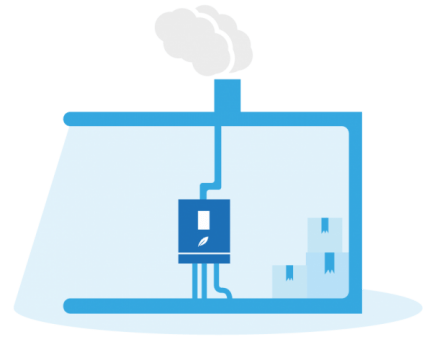
Hard water is harmful to your heating system and boiler. This is because limescale builds up on the pipes and on vulnerable parts. The rough surface of the limescale then allows other limescale particles to adhere to it easily. This build-up of limescale restricts the flow of water through the boiler, causing it to lose its (high) efficiency. This is because limescale is very effective at insulating heat.
As a result, the annual energy bill for a four-person household can easily increase by €50 to €60. A water softener therefore improves efficiency, but you’ll also save on the maintenance costs of your central heating boiler and on other costs. You can read more about the latter in section 3.
Consequence 3: a doubling in the use of cleaning products
Limescale build-up in appliances such as yours washing machine, coffee machine and dishwasher, can result in high costs. This is because you use much more soap and other cleaning products. In fact, with a water hardness of 10 German degrees, you need almost twice as much washing-up liquid as you would at 0 German degrees. The annual savings can amount to as much as €400.
The fact that you need to use more soap is, on the one hand, down to the ‘stain-removing power’ of hard water. This is much lower than when you wash with soft water. What’s more, limescale causes the pipes in your washing machine, for example, to become blocked. This is because a reaction occurs when limescale and soap come into contact with each other. The more limescale there is in the water, the greater the build-up of limescale and soap. The water and soap find it increasingly difficult to flow through the pipes, and less and less soap will reach the washing machine. Meanwhile, the pipes become increasingly blocked…
Consequence 4: dry skin
Hard water refers to the presence of magnesium and calcium in the water. The concentration of these minerals in hard water is high and causes skin irritation. This is because the pores in our skin open up when we shower or bathe. The hard minerals penetrate the skin and cause irritation there. If you already suffer from skin problems such as eczema or psoriasis, you’ll find the tiny limescale particles in hard water even more troublesome. Your skin will feel dry and tight, causing itching and irritation.
Another disadvantage of hard water is that soap and shampoo do not lather as well. This means you automatically use more of these products, leaving a thin film of soap, limescale and dirt on your skin. The same applies to your clothes. Because of the hard water, more soap is needed, some of which remains in and on your clothes. When this comes into contact with your already sensitive skin, it can cause further problems.

Consequence 5: cleaning the house takes more time
Limescale not only costs money, but also time and energy. As limescale is a form of rock, it is not easy to remove. You therefore end up spending a lot of time removing limescale. Cleaning products that are (too) harsh may produce quick results, but they can also damage the surface.
Consequence 6: damaged equipment
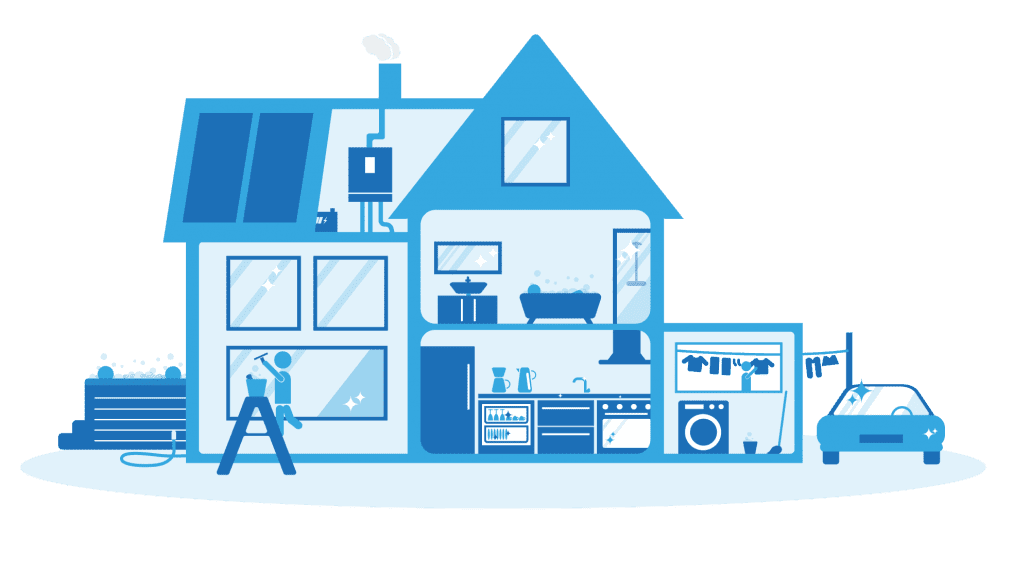
Appliances don’t cope very well with hard water. A lot of equipment breaks down because limescale builds up over time. In your espresso machine (or Nespresso) or a boiling-water tap, limescale builds up in the boiler, causing the appliance to simply stop working over time. Initially, you’ll experience faults or glitches; if you don’t descale it soon, the appliance will eventually break down.
After a while, your shiny thermostatic mixer tap will not only become dull due to limescale, but the control discs will also be affected. If you find it harder to adjust the temperature because the knob is stiff, it’s only a matter of time before the tap starts to fail.
Limescale in hard water also reduces the effectiveness of, for example, your electric kettle. The build-up of limescale in the kettle means that it has to work harder to bring the water up to the right temperature. Not only does this cost the kettle energy, but you’ll also see the impact on your energy bill.
Consequence 7: limescale streaks on glass and paintwork
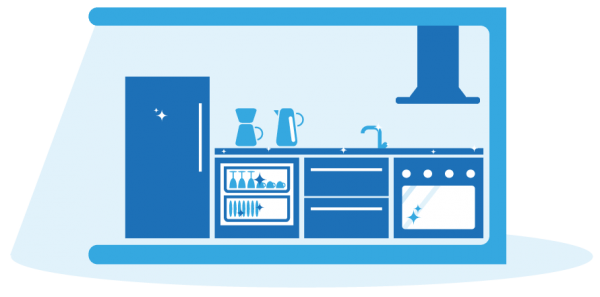
Hard water leaves unsightly streaks on windows, glassware and your car’s paintwork. This is because, as the water dries, the water molecules evaporate but the limescale particles do not. These are left behind on the freshly washed surface, leaving streaks, rings or stains. It’s no coincidence that window cleaners use limescale-free water to get windows streak-free.
Consequence 8: coffee and tea taste bitter
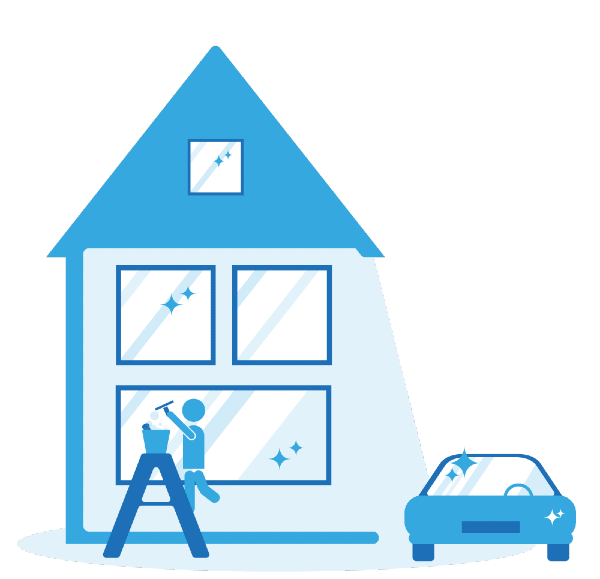
Does it seem as though your tea and coffee don’t taste as they should? This could well be due to the hard water you’re using to make these drinks. The oils in the tea leaves and coffee react with the limescale particles in the water, which not only leaves a brown residue in your cup but also alters the flavour of your coffee or tea. You can prevent this by boiling the water for a long time so that the limescale settles, or by purchasing a water softener.
Consequence 9: corrosion of glassware
It will sound familiar to many people with a dishwasher: the dishwasher has run a 3-hour cycle, but the crockery still isn’t clean. Why is that? You’ve guessed it: hard water. Because hard water has a lower stain-removing capacity than soft water, more detergent is needed and the dishwasher has to run at a higher temperature. The result of the extra detergent and high water temperature is that your glassware and crockery corrode more quickly. What’s more, the cost of dishwasher tablets can really add up, as many people pop an extra tablet into the machine if the dishes aren’t coming out properly clean.
The solution: a water softener
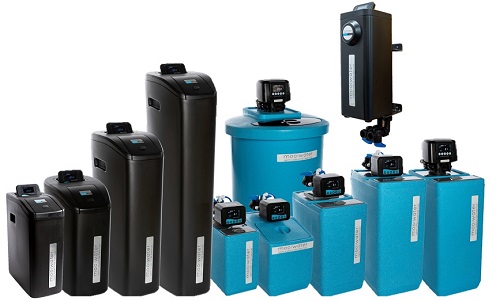
As you have read, hard water has many unpleasant consequences. However, there is a solution: a water softener from beautiful water. You can get one from as little as €995. However, this one-off investment pays for itself quickly. You’ll save up to €500 a year on your energy bills and cleaning products. What’s more, you’ll extend the lifespan of your appliances.
Would you like to find out more about the benefits of a beautiful water Water softener? Please contact us via 085 060 4470 or visit the page Buying a water softener For more information and the various models of water softener
Do you have any questions?
We’re here to answer any questions you may have!
🟢 Available today until 5.00 pm
Have you made a decision yet?
Why not request a free, no-obligation quote?
Running costs
Compare
Overview of water softeners
Placement
Water hardness
Facts and myths