
How do I descale my Nespresso appliance?
Why descale a Nespresso appliance?
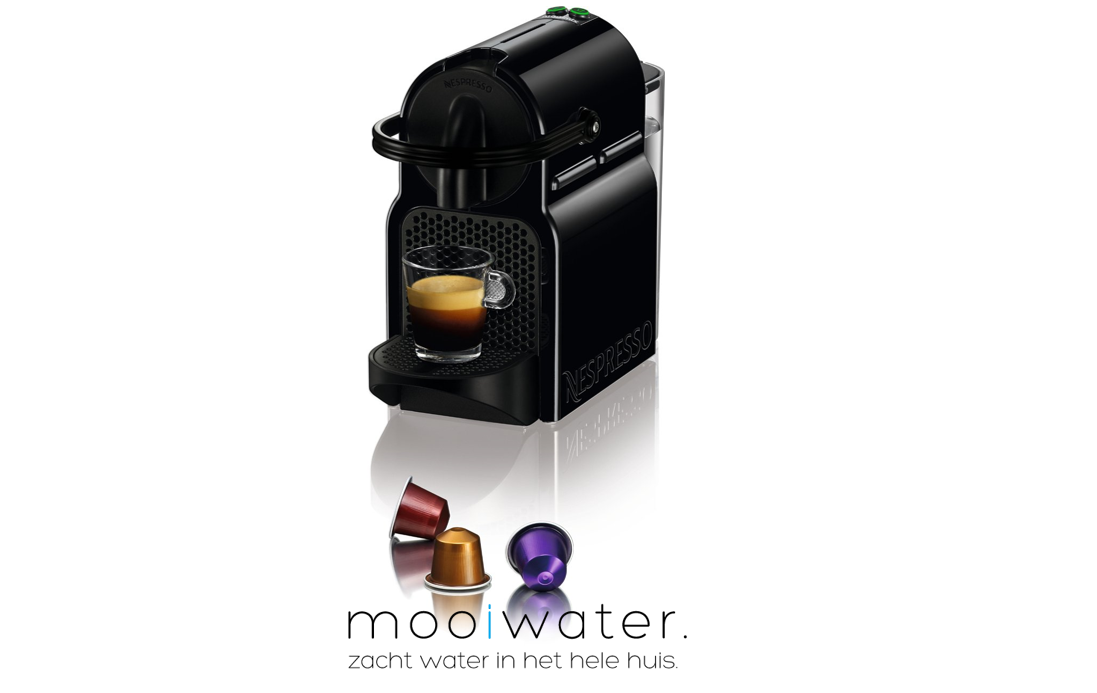
Tap water in the Netherlands typically contains lime. Depending on where you live in the Netherlands, your tap water may contain a lot or a little limescale. This limescale causes limescale what gets deposited on the heating element of your Nespresso unit. As a result, it’s taking longer and longer for your Nespresso machine to heat up your coffee. To sort this out, you need to descale your Nespresso machine every so often, or you could buy a water softener Yes, that’s an option too.
How do I descale my Nespresso appliance?
To maintain the quality and flavour of your coffee and extend the machine’s lifespan, it is recommended that you descale the Nespresso machine every 6 months, i.e. twice a year. Some machines also give a signal when it is time to descale.
This prevents limescale build-up in the pipes, which can cause malfunctions or even damage to the machine. If you can’t remember when you last descaled it, signs such as lukewarm coffee, slow coffee flow, reduced coffee flavour, or problems with the capsule grip are indicators that descaling is required.
Here are five simple steps to descale your Nespresso appliance:
Step 1: Remove any old capsules and empty the drip tray.
Start by removing all old capsules from the machine, both from the collection tray and any that may have been left behind inside the machine. Also empty the drip tray and make sure you have a collection container with a capacity of 1 litre.
Step 2: Fill the water tank with descaling agent, vinegar or citric acid.
Fill the water tank with your chosen descaling agent and dilute it with water according to the instructions on the product. If you don’t have a descaling agent, you can use cleaning vinegar mixed in equal parts with water.
Step 3: Start the descaling process.
With the water tank filled and the drip tray positioned under the spout, press and hold both the lungo and espresso buttons (the small and large buttons) for 3 seconds. As soon as both buttons start flashing, press the lungo button to start the descaling process. Let the machine rinse until the water tank is empty. Then empty the drip tray, rinse the tank thoroughly and fill it with water.
Step 4: Rinse the machine with water.
Place the empty drip tray back under the spout and press the ‘lungo’ button again to rinse the machine through with water. Leave it to run until the water tank is empty. Empty the drip tray again and rinse the water tank once more to remove any residue.
Step 5: Exit the descaling programme.
Press the lungo and espresso buttons again to end the descaling programme. The Nespresso machine is now ready to make coffee again.
Do you have any questions?
We’re here to answer any questions you may have!
Have you made a decision yet?
Why not request a free, no-obligation quote?
Running costs
Compare
Overview of water softeners
Placement
Water hardness
Facts and myths
Prevent limescale build-up in your Nespresso appliance
The best way to keep your Nespresso appliance free from limescale is, of course, to prevent it from limescale arises. With a water softener, also known as a water softener, means you’ll no longer have to worry about limescale. A water softener The 100% removes limescale from your tap water. This means you no longer need to descale your appliances, and you’ll extend their lifespan.
See more benefits of a water softener.
Any more descaling tips?
What applies to your Senseo appliance also applies to many other appliances in your home, such as your Quooker. See below for more tips on descaling.
– Descaling a kettle
– Descaling the Senseo unit
– Cleaning black taps
– Descaling a shower head
– Removing limescale from the toilet bowl
– Tips for rain showers