
What is the difference between our water softeners and magnetic water softeners?
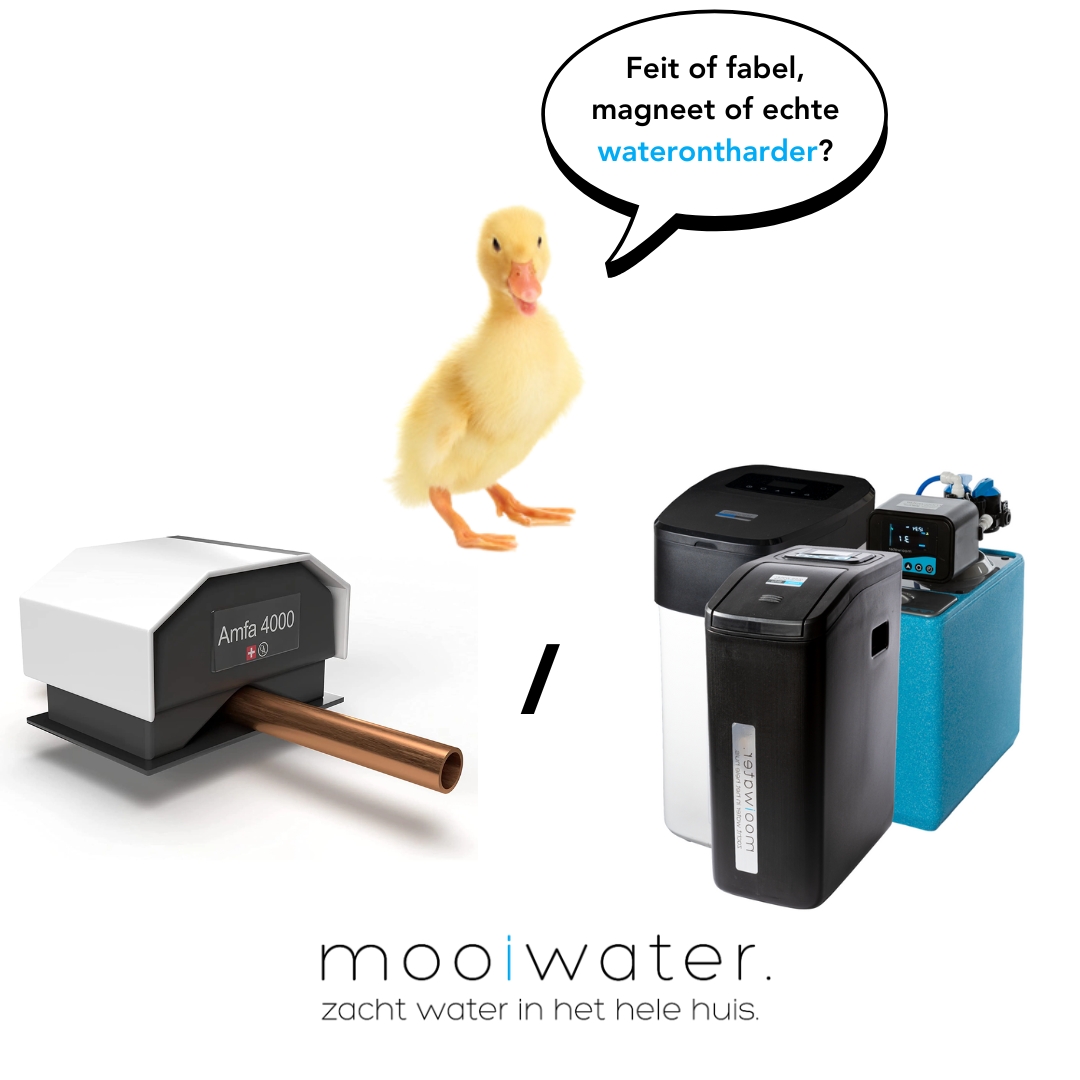
To answer the question straight away, ours do work. Read below to find out why resin-based water softeners work, whilst magnetic softeners do not.
Genuine water softeners work on the principle of ion exchange. This is also the case with those from Mooiwater. The limescale is removed from the water by a resin filter and a salt rinse, thereby genuinely softening the water. In addition, there are also magnetic water softeners, water softeners that you on a installs the pipework. These do not remove the limescale but supposedly alter its composition.
Many people have their doubts about how magnetic water softeners. Among other things, the TV programme Kassa and the Consumentenbond We’ve looked into this. Magnetic water softeners seem too good to be true – and, in fact, they are. We’d be happy to provide you with more information on this.
Read on!
The effect of magnetic water softeners on health
Magnetic water softeners are considerably cheaper than water softeners that use ion exchange. However, there is a clear difference in the quality of the two types of softener. This is because water softeners fitted to the mains do not remove limescale from the water!
Suppliers of magnetic water softeners claim that it is very important for health that the composition of the water remains unchanged. However, this is not the case. The amount of minerals (calcium and magnesium) removed from the water and the amount of sodium added by our water softeners is so small that this claim is misleading. To meet your daily calcium requirement, you would need to drink more than 28 litres of water a day in, for example, the municipality of Dronten.
How magnetic water softeners work
When using a magnetic water softener, the calcium (Ca2+) and magnesium (Mg2+) are not removed from the water, but the calcium and carbonate ions (CO32+) combine to form calcium carbonate (CaCO3). This prevents it from sticking to the pipes. The use of magnets does not alter the composition of the drinking water; it only affects the structure of the calcium carbonate. The water contains exactly the same minerals as when the magnets are not used.
After prolonged use of the magnets, which are placed on the pipes, the pipes are said to become descaled. In theory, the calcium in drinking water could be broken down and neutralised by powerful magnets. In practice, however, the correct materials and conditions are often lacking, making the effectiveness of these ‘water softeners’ highly questionable.
Have you made a decision yet?
Why not request a free, no-obligation quote?
Magnetic water softeners have little effect
A magnetic water softener can only work if the magnetic field is strong enough. Furthermore, limescale particles are only negatively charged whilst the water is flowing. As soon as the water stands still in the pipe, they lose their charge and limescale build-up occurs again, with all the associated consequences. There is therefore hardly any evidence that limescale magnets work, that they have an effect on limescale in tap water, or that they produce genuinely soft water. Science has no clear theoretical basis for this, and positive practical results are rarely reported. The ‘evidence’ that is presented as scientific research is methodologically flawed. The use of magnets does not, therefore, soften the drinking water, but rather alters the properties of the water, which is said to result in less limescale being deposited.
Two different types of magnetic water softeners
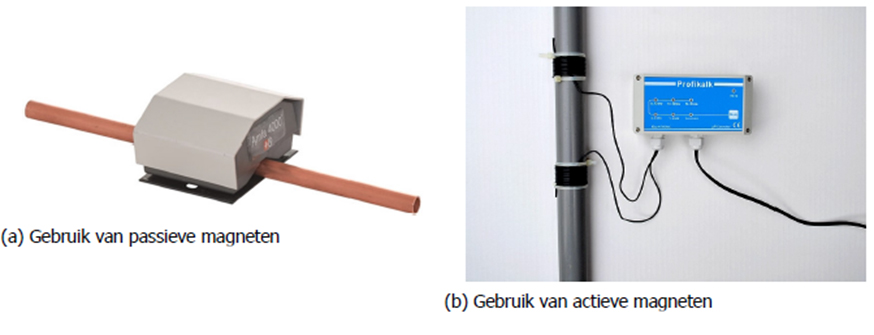
There are two different types of magnetic water softeners, in which the magnetic field is generated by passive or active magnets. Both devices are shown in the figure below. Figure (a) shows the device that uses passive magnets, and figure (b) shows the one that uses active magnets.
With passive magnets, the device is clamped onto the water pipe. The device uses a material that is naturally magnetic and requires no power. With active magnets, the device is connected to a 230-volt supply and wires are wound around the water pipe. This creates a magnetic field.
Effectiveness of magnetic water softeners
There is much debate about the effectiveness of devices that use magnetism. Over the years, several studies have been carried out to test their effectiveness and how they work. The results of these studies vary widely and are sometimes even contradictory. The theoretical model explaining how magnetic water softeners work may well be correct, but in practice, these devices appear to generate a magnetic field that is too weak to achieve the desired results.
Almost every week, we get new customers who come to us after first trying to solve their limescale problems with a magnetic water softener. They have often come to the conclusion that, unfortunately, cheap ends up costing more in the long run. We cannot provide you with any clearer proof of this. We therefore advise against fitting a water softener to your mains water supply and instead recommend choosing a proper water softener.
Water softeners from Mooiwater
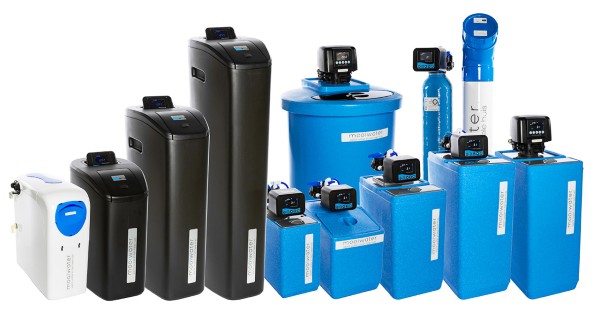
Would you like the guarantee that you’ll be rid of all that limescale? Then a ion-exchange water softener the only right choice, and choosing Mooiwater is the best choice. Mooiwater’s water softeners operate using this tried-and-tested method and keep the water lime-free 24 hours a day 100%.
Do you have any questions?
We’re here to answer any questions you may have!
🔴 We are currently unavailable by telephone. However, you can always send a email Send!
Have you made a decision yet?
Why not request a free, no-obligation quote?
Running costs
Compare
Overview of water softeners
Placement
Water hardness
Facts and myths